Thank you as always for using Nuita.
Once again this month, it’s time for our monthly treat — the Nuita Newsletter! Let’s look back together at this month at Nuita.
That said, this time the content seems to be a little geared toward tech nerds…
We introduced imageproxy
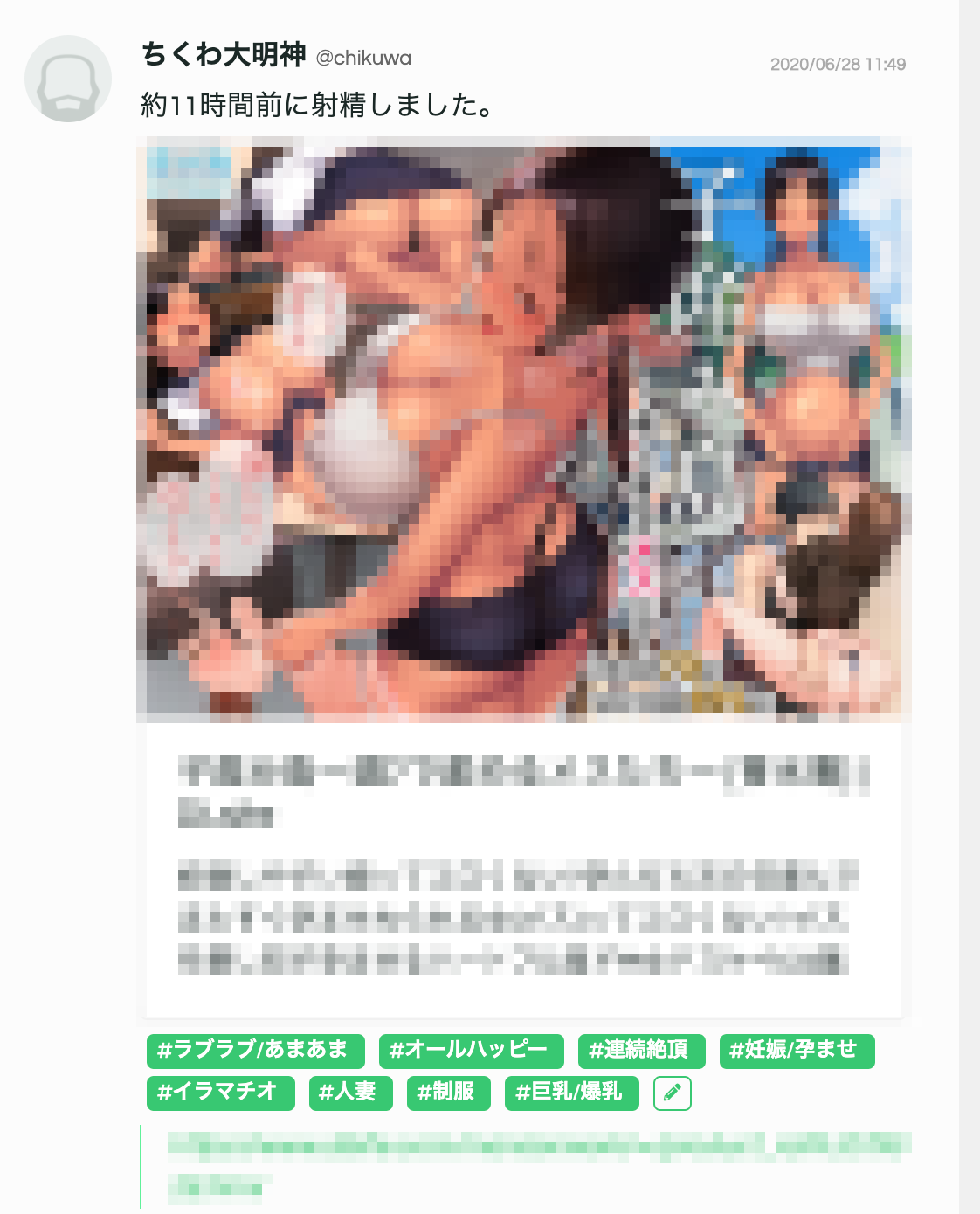
When a user’s nweet contains a URL, Nuita automatically analyzes the linked page, retrieves information from it, and displays the content on the timeline (this process is publicly developed as panchira).
In order to display a thumbnail of the content, we need to fetch and share an image from the original page. However, if we embedded a link to the original image directly, it wouldn’t just be a security risk — every time someone accessed Nuita, a request would be sent to the original site’s image, placing a burden on that site’s server.
To prevent direct access to the original site, we had been using camo as a temporary proxy server. It functions as a sort of stepping stone, avoiding direct links to images, and it seems to have actually been used (or used to be?) by various web services such as Togetter.
On the other hand, since it requires a separate caching mechanism, and updates seem to have stopped about three years ago (the last update appears to have been in 2017), it would occasionally stop working properly, and as a result we sometimes had no choice but to keep its use to a minimum.
So, as a new initiative starting this month, Nuita has introduced imageproxy!
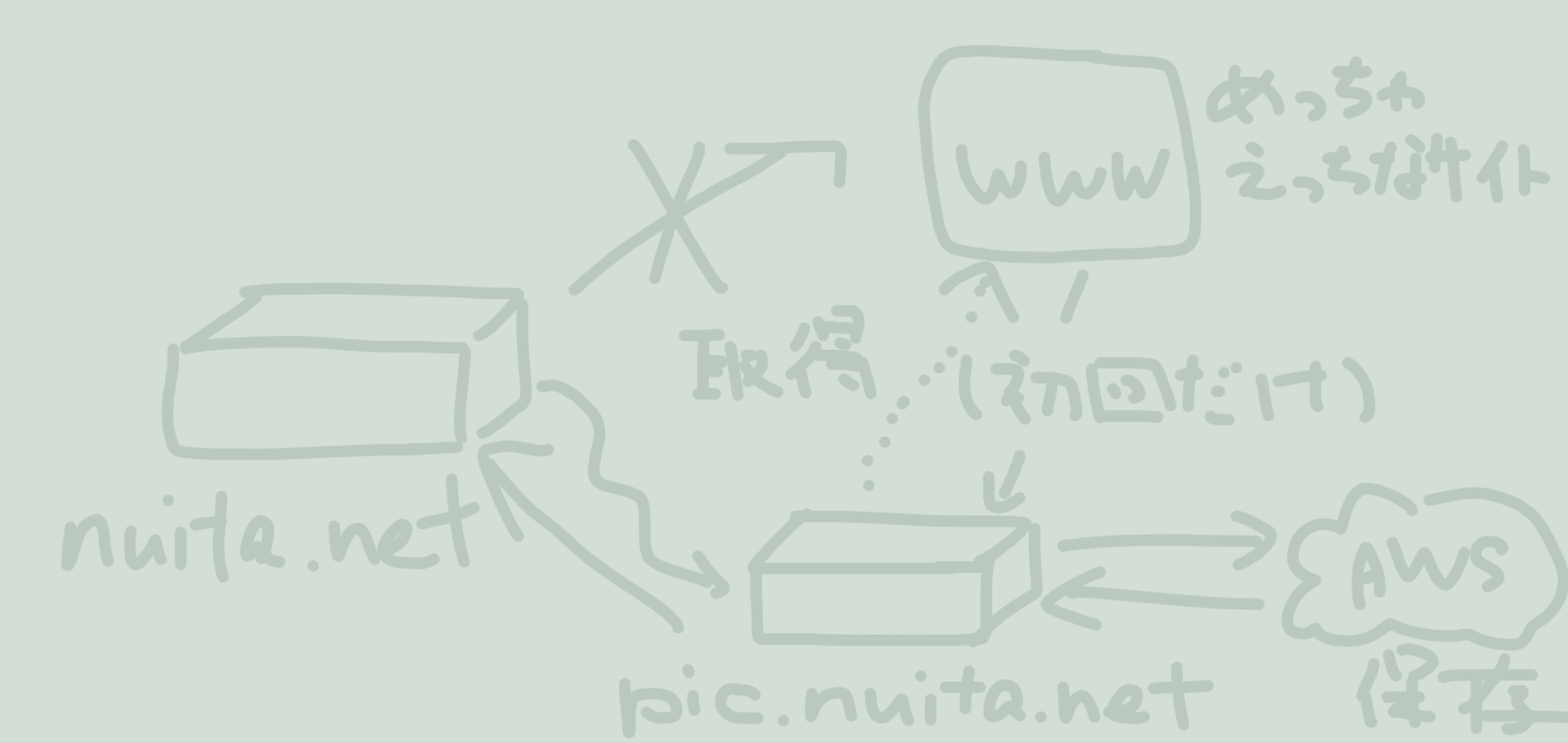
Like camo before it, this also functions as a proxy server, but it doubles as a caching server as well, temporarily storing posted images in memory or storage to keep access to the original site to a minimum.
When a user posts a URL, the image is cached in Nuita’s server memory, and the URL’s thumbnail is displayed without ever accessing the original site. Storage on AWS is also sometimes used as a cache area besides memory, but images stored there cannot be viewed directly, and are automatically deleted after a certain period.
At Nuita, we will continue developing with the goal of being a service that benefits content platforms and creators alike. For more details on that policy, please check out this article.
We introduced Docker and Github Actions
Nuita’s development takes place on Github, where volunteer engineers work on the repository day and night for the sake of better ejaculation reports.
However, software development can look pretty unglamorous and often brings no real joy, so we found ourselves developing our own bodies more than developing Nuita in order to get some direct pleasure.
So, in order to get the most out of the limited time we can devote to Nuita, we’ve newly introduced Docker and Github Actions!
Docker is software that lets you easily spin up containers (at the risk of angering those who know better, think of it as a kind of virtual machine), and by sharing its configuration file, multiple developers can easily share the same development environment.
Also, Github Actions is a handy feature that automatically runs a series of commands in a virtual environment against code on Github — with this, machines can handle testing and deployment even while humans are busy ejaculating. Automating deployment is a goal for the future, but at this stage it’s used for automated testing of pull requests and merged code.
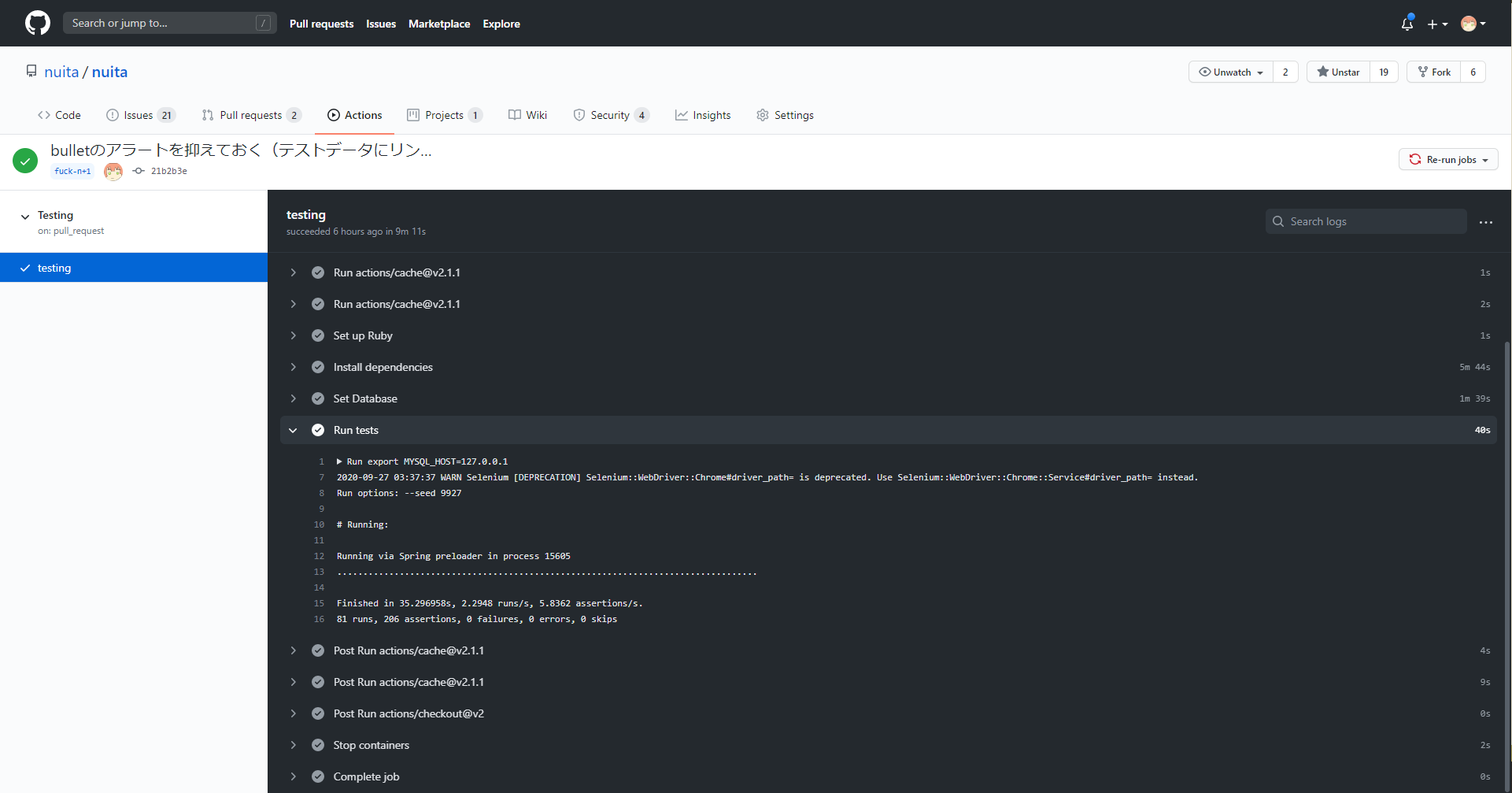
With the introduction of these new technologies, we’re confident that developing Nuita has become even more convenient! If you’re reading this and happen to have even a little web engineering skill, why not join us in the fun of developing Nuita together?
If you have any thoughts on these new features, please feel free to reach out to us on twitter or GitHub. Now then, please enjoy ejaculating on Nuita, made even more convenient with its new timeline!